
INTRODUCTION.
The art world has always been an exclusive playground, but that is rapidly changing with the rise of new financial models aimed at democratising the market. ARTPAY offers a revolutionary way for buyers, artists, and investors to connect. By providing interest-free, asset-backed finance options, ARTPAY is tackling the traditionally high costs and inaccessibility that have long been a barrier to entry. With art’s value as both a financial asset and cultural treasure growing, ARTPAY aims to reshape how art is bought, sold, and invested in, creating opportunities for a wider audience to participate in this booming industry.
COMPANY OVERVIEW.
ARTPAY was founded to close the gap between the ARTISTS & ART DEALERS, ARTWORK BUYERS, and INVESTORS by mobilising the multi- stakeholder partnership between the 3 groups and ARTPAY to share knowledge, expertise, technology, and financial resources through the provision of asset-backed interest-free finance to buyers.
With art galleries charging up to 50% commission on the sale of artwork and collectables, ARTPAY is set to revolutionise the arts industry and allow artists to retain the majority of the profits from the sale of their artwork.
Unlike traditional credit services, the BUYER does not have to:
- Enter a traditional personal or business loan of 3 to 10 years and pay interest in the high single digits or mid to very high double digits.
- Pay any additional amount by way of late fees to ARTPAY if repayments are made on time.
- Complete lengthy paperwork that causes delays in securing an artwork or collectable.
- Pay monthly or annual account- keeping fees.
Also, the interest-free loan term is for a maximum of 12 months with payments made by way of equal direct debit instalments payable weekly, fortnightly, or monthly.
THE ART MARKET.
The global art market is a marketplace of buyers and sellers trading in the services and works-of-art. While the market remains predominantly offline, online sales have seen increasing growth in recent years. The global art market was valued at over US$65 billion in 2023. This increase is also shown in the volume of global art sales which reached approximately 39.4 million in the previous 5 years.
The UHNWIs’ wealth associated with art and collectables was US$2,174 trillion in 2022 and Deloitte’s predict this figure could grow to an estimated US$2,861 trillion in 2026 due to increased number of UHNWIs across the world and their increased allocation of wealth to art and collectables.
The Contemporary Art Market has had outstanding results clearly visible in the record volume of transactions, even higher than in the post-Covid rebound a year earlier. In 22/23, the global contemporary art market exchanged an absolute record number of artworks: more than 123,000. This is an exceptional volume, twice that observed ten years ago, and 100 times that observed at the beginning of the 2000s.
Auction totals are the only publicly accessible figures and only represent a portion of total sales in the art and collectables industry.
Payment plans increase sales across various industries and an offering of payment plans have shown up to a 200% increase in the conversion rate of sales.
CHALLENGES FACING THE ART INDUSTRY TODAY.
The 2 main challenges facing the art industry today are as follows:
- Impact investing
Although many cultural projects and organisations deliver on social impact, they struggle to provide financial returns in the way that investors investing in the art market expect.
- Art-secured lending
- Despite significant demand for art-secured lending services among artists 69% of buyers said that they would take advantage of an art-secured lending service. The issue amongst private banks is addressing the valuation of artwork and the associated risk when using artwork as security for loans.
- Banks and other financiers will only lend up to 50% of the purchase price.
- Buyers are only able to access the artwork purchased upon the full repayment of the loan.
- Interest rates are from high single digits to very high multiple digits of up to 98% making the acquisition of artwork difficult for the average buyer.
ART AS AN INVESTMENT.
Art is regarded amongst investors as a portfolio diversifier. Its low correlations to equities and traditional asset classes make art a valuable insulator and store of wealth.
About 81% of buyers want their wealth managers to incorporate art and collectables into their service offering, which is up from 66% in 2017.
The art market has come a long way over the last couple of decades. The globalisation of art is seeing trades around the world made with greater ease and due diligence. The international art market is becoming a place without boundaries, and this presents Australia, which has been traditionally disadvantaged by geography, with huge potential and opportunities.
Performance:
Positive returns in the art market between 2000 and 2018
- Artnet’s Index for the top 100 ARTISTS produced an 8% Compound Annual Growth Rate (“CAGR”) between 2000 and 2018, compared with 3% for the S&P500.
- The market is projected to grow at a CAGR of 3.1% between 2024 and 2032, reaching a value of around USD 97.22 billion by 2032.
Returns on European Old Masters and Impressionist and Modern Art Level Out, whilst Post-War & Contemporary outperform the S&PS00
- According to Artnet Indices, returns on Old Masters have stabilised at a level below the S&P500, with no significant growth or decline since 2017.
- The Global Impressionist and Modern Art Markets are comparable to the S&P500 level.
- Post-War & Contemporary Art has significantly outperformed other art markets as well as the S&P 500, particularly since the financial crisis in 2009.
- Global Post-War and Contemporary Art show a higher correlation with the S&P500.
- Across the board, for all collecting categories, art as an asset class has a stronger positive correlation with the price of gold than with other asset classes.
Fractional Ownership of the ART:
New Art Investment Models
Fractional art ownership models have emerged in recent years aimed at democratising an art investment market worth billions of dollars.
In the future, low-net-worth individuals who would usually be excluded from investing in artwork may be able to own a fraction of an expensive work of art. This could prove particularly valuable and interesting for small investors who have not been able to meaningfully invest in fine art in the past.
ART AS SOCIAL IMPACT INVESTING IN ART CULTURE.
Relationship between arts, culture and sustainability.
- The relationship between sustainability, arts and culture has attracted growing interest over recent years.
- Culture brings added value to societies and local communities in both monetary and non-monetary terms through the promotion of cultural diversity, improving tourism and gastronomic sectors, and boosting the use of arts as a medium for urban regeneration.
- Culture has the power to create decent jobs and economic growth, reduce inequalities, and build more peaceful and inclusive societies.
- Companies have chosen to set up initiatives to support and promote arts and culture which can have an impact on a company’s value creation and across the social and economic landscape to include corporate social responsibility and sustainability strategies.
- The increasing number of private museums, foundations, and corporate collections at an international level underlines the potential benefits created by companies or individuals with philanthropic purposes and this is why companies support the local cultural landscape through grants, scholarships, education programs, and exhibitions
Shift Towards Impact Investing as the World Faces Even Greater Challenges.
An increasing number of investors are keen to ensure that their money has a positive impact on society and the world at large and there is a global shift in investment trends towards focusing on more than just the financial returns on a given investment.
Socially Responsible Investment Products in Art & Culture are Ranked Highly by Private Banks.
- About 28% of wealth managers said that socially responsible investment products in art and culture would be most relevant to clients.
- Since 2000, Art has outperformed the S&P 500, returning over 360%
Technology is Driving Change in the World of lmpact Investing.
The advent of blockchain technology and tokenization looks set to usher in the next generation of art and cultural impact investment models that combine fractional ownership with social impact investment.
Millennials Want to Do Things Differently.
Millennials Want to Do Things Differently Millennials are having an impact on philanthropy by combining charitable giving with profit-making endeavours and social enterprises. This is the generation that is likely to develop the social impact investment and philanthropic models for art and culture that will prevail in the 21st century.
ART AS AN ASSET CLASS.
Evaluating the performance of art as an asset class over the last 2 decades, the Artnet Index for the Top 100 ARTISTS displays a considerable positive return over time for artwork.
The Artnet Index has outpaced the S&P 500 in growth consistently, even considering the 35% hit the Artnet Index took between 2008 and mid-2009.
Art investment helps to diversify traditional portfolios which are typically composed of stocks and bonds.
Millennials are a new class of emerging active investors. They are typically more receptive than older generations to investing in alternative assets such as art as most of them have lived and studied abroad where they have been exposed to foreign art culture.
There is a growing trend for new products aimed at ultra-high-net-worth individuals offering investment coupled with wealth planning solutions such as trusts and foundations.
The financial aspect of art ownership has become even more important in the last 7 years. More of today’s artwork collectors are motivated by investment returns and portfolio diversification as well as a desire to hedge against inflation and store wealth in a safe haven asset.
Artwork particularly attracts investors as it is regarded as a value-preserving asset class. Like gold, artworks are less susceptible to risks associated with financial market crashes than stocks and bonds.
Due to the intrinsic value of art as a luxury item, artworks can rebound and even grow faster than traditional asset classes in response to financial turmoil. This pattern is evident following the 2008 financial crisis when the Artnet Index for the Top 100 ARTISTS was able to recoup its peak value by 2011, the S&P500 took 5 years to recover.
There is an added benefit that is unique to artwork investment as an asset class not shared by any other luxury item. Although capitalising on the art market always involves a word of caution for investors, artworks can be enjoyed by owners who are passionate in a work regardless of its monetary value. Whether a painting hangs in a living room, or a sculpture greets visitors in a public space, the non-financial worth of a piece of art is unparalleled by any other asset class.
THE HOLDING EFFECT & BENEFITS FOR HOLDING ART LONG-TERM.
Sotheby’s Mei Moses Index uses the purchase prices of the same painting at two distinct moments in time (i.e. repeat-sales) to measure the change in the value of unique works of art.
Developed in 2002 by New York University Stern School of Business Professors Jianping Mei, PhD and Michael Moses, PhD, the Sotheby’s Mei Moses indices control for differing levels of quality, size, colour, maker, and aesthetics of a work of art by analysing repeat sales.
The Sotheby’s Mei Moses Indices are widely recognized to be the preeminent measure of the state-of-the-art market. Leveraging over 60,000 repeat auction sales for the same object over time, Sotheby’s can produce objective art market analysis to complement the world- class expertise of its specialists.
The Sotheby’s Mei Moses Index is used by wealth management firms such as JP Morgan and Morgan Stanley and has been cited in publications such as The New York Times, The Wall Street Journal, The Economist, and The Financial Times.
Repeat auction sale data analysed from Sotheby’s Mei Moses suggests that artwork held off the auction market for at least 10 years benefitted from the “holding period effect” in which works were more likely to be sold for profit, had substantially lower CAGR volatility and had much higher risk- adjusted returns. This was an analysis based on 10,500 Impressionist & Modern and Contemporary works resold at auction between 2014 and 2018.
A total of 80% of impressionists & Modern works held over 10 years had a resale price higher than their purchase price, while only 65% of Contemporary works and 57% of impressionist & Modern works resold within 3 years sold for a higher price.
The average returns and volatility of works were relatively consistent for works held for approximately 20 years or more. This means that once work had been off the market for a substantial period, there was no additional penalty or reward for holding it longer. Thus, most auction consignors who held works of art for at least 10 years benefited from the “holding period effect” as their artwork grew in value.
ARTWORK AS AN ASSET FOR TAX PURPOSES.
The Australian Taxation Office (“ATO”) considers the purchase of artwork as either an appreciating or depreciating asset.
Although artwork has a low rate of depreciation of approximately I% per financial year, it may not be a great incentive for buyers. However, as the ATO also considers artwork to be a depreciating asset, artwork qualifies for the instant asset write-off measure.
The criteria are that the artwork must be:
- Tangible.
- Capable of being removed.
- Purchased with the dominant purpose of display in a business premise.
- Not be trading stock.
There is no bar to whether the artwork is bought as a resale, or whether the parties to the transaction are related and there is no limit to the number of artworks purchased.
COMMENTS ON THE CURRENT LENDING ENVIRONMENT IN THE ART INDUSTRY.
The art- secured lending market has experienced growth over the last 10 years with a conservative size estimated to be between US$21 – $24 billion in outstanding loans against art but which only accounts for 1 % of art and collectable private wealth today.
About 60% of art collectors say that art-secured lending was among the most relevant wealth management services compared with 46%.
Art dealers, auction houses, art advisors, and artists see the benefit of art finance with 69% saying that their clients would take advantage of such a service if it was available to them.
Almost 71% of private bankers said that the difficulty with measuring and assessing risk was a key challenge to incorporating art-secured lending in their art and wealth services offering.
Valuing artwork is a source of concern for private bankers when it comes to art-secured lending with 63% of private bankers saying that this was one of the main concerns when it came to art-secured lending.
About 61% of private bankers said that a lack of knowledge of the art market was a key hurdle in providing finance to buyers.
Almost 53% of art collectors surveyed said they would be interested in using art finance to purchase more artwork.
About 31% of art dealers surveyed said they would be interested in art-secured lending and 87% said they would like to see better access to acquisition finance.
It’s being said that 57% of art dealers surveyed said that access to credit was poor to very poor.
ARTPAY’S LENDING PHILOSOPHY.
The Financial Services Royal Commission enquiry has proven difficult for buyers to obtain short to medium-term finance through traditional channels.
Buyers are looking to private lenders to assist with their artwork acquisition.
ARTPAY has taken this void one step further by providing the world’s only asset-secured interest-free finance to buyers.
ARTPAY focuses on underwriting interest-free finance with 1st and 2nd registered mortgages to a maximum finance-to-value ratio of 75%.
Also ensuring the buyer has the artwork insured during the interest-free period.
FINAL THOUGHTS.
In a world where art is both an investment and a cultural statement, ARTPAY is paving the way for a more inclusive and accessible market. By bridging the gap between artists, art dealers, buyers, and investors, they are not only liberalising art ownership but also opening new financial investment opportunities. As the art market continues to evolve, ARTPAY is poised to be a game-changer in how art is valued, financed, and enjoyed by all.
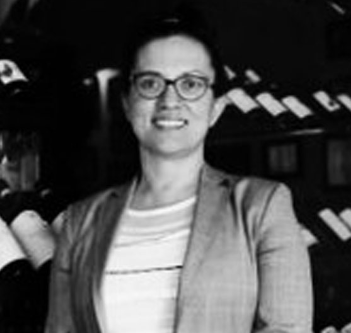
Monika Lama
Director & Founder
Artpay
About the author:
Monika Lama is the founder and director of Artpay, which is recognised as the world’s only private lending fund specifically for the fine art and collectables industry.
In addition to her role at Artpay, Monika Lama is a director of Lama Family Lawyers, where she specialises in family law and mortgage law. She has extensive legal experience, particularly in complex family law matters and financial agreements.
Monika holds a Master of Applied Law in Family Law, as well as degrees in Law and Biomedical Science.
Monika is also actively involved in various organisations; she serves as the President of the Polish Australian Business Forum (PABF), is an advisor to a private lending company, and sits on the advisory board of a tech start-up company.
Monika Lama combines her legal expertise with innovative financial solutions in the art sector, aiming to redefine how art can be financed and acquired.
You may contact Monika at:
or
https://www.linkedin.com/in/monika-lama-director-artpay-a6289514b